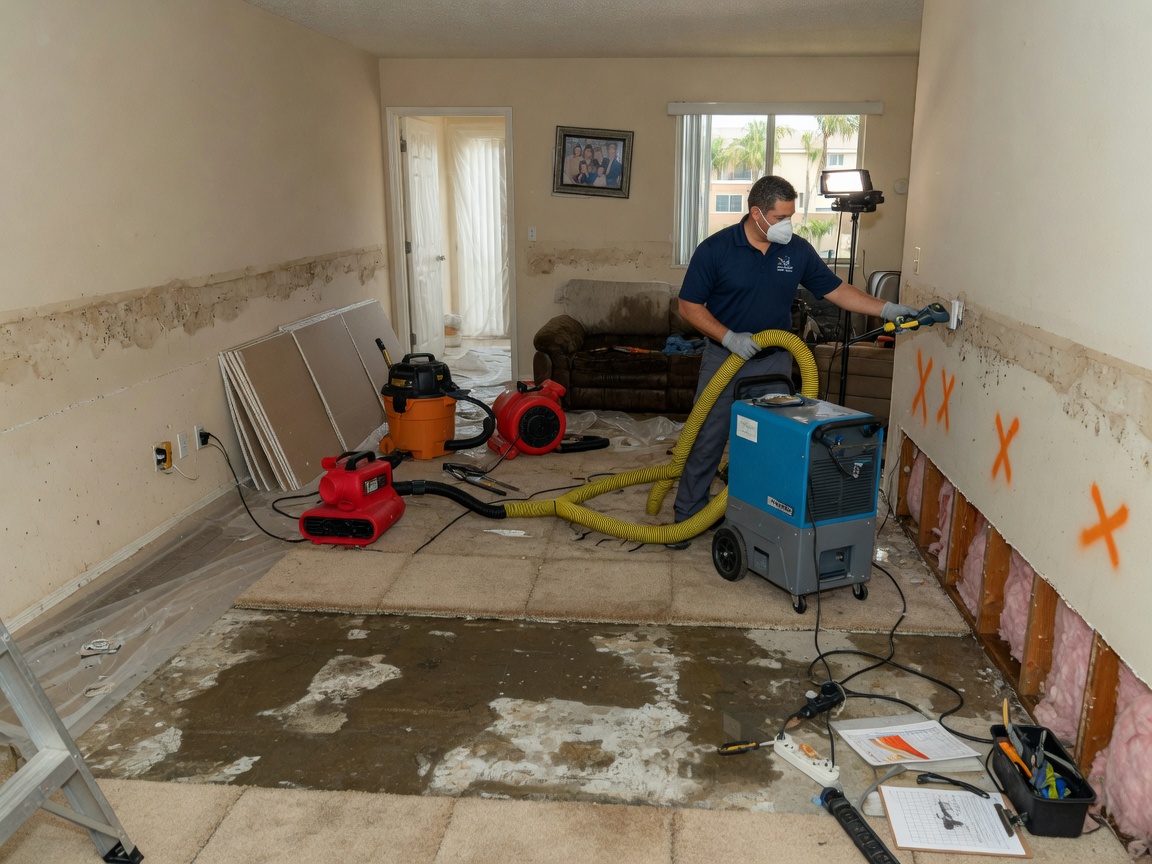
Irvine homes built in the 1980s through 2000s in neighborhoods such as Northwood and Woodbury often feature stucco exteriors and slab foundations that trap water from irrigation leaks or roof penetrations during the cool winter months. Once moisture enters wall cavities it travels along the mild Mediterranean climate's dry summer winds, hiding damage until drywall softens or odors appear. Technicians map moisture with meters rather than relying on visible signs because the region's low summer rainfall lets hidden pockets persist for months.
Properties near the Orange County Great Park and in Quail Hill sit on slightly sloped terrain that directs runoff toward foundations during rare heavy winter storms. Slab leaks in these post-1990 builds frequently affect adjacent rooms without obvious pooling, requiring removal of baseboards and targeted drying behind cabinets. Work near the Irvine Spectrum Center and University of California Irvine also contends with higher-density townhomes where shared walls can move moisture into neighboring units if extraction is delayed.
Nearby cities such as Tustin, Lake Forest, Newport Beach and Costa Mesa share similar housing stock, yet Irvine's planned grading and soil compaction change how water migrates under slabs compared with older coastal lots. Technicians therefore focus on negative air setups and daily moisture logs to meet local building department expectations for documentation before drywall replacement. This approach prevents callbacks when summer heat returns and any remaining moisture drives mold growth in insulation.
Technician insight
In Irvine the thing that catches most people out with water damage restoration is how the dry summers let slow irrigation leaks in Quail Hill and Oak Creek homes stay hidden until winter rains push moisture under slabs and into neighboring units.
Hidden slab leak in Northwood townhome
Homeowner in Northwood noticed soft flooring after cool winter temperatures. Assessment found water migrating from a slab penetration along the foundation. Extraction and targeted drying prevented spread into shared walls; affected sections were replaced once readings stabilized.
Water Damage Restoration Services We Offer
✓Emergency Water Extraction
Rapid removal of standing water from slabs and carpets in Irvine homes using truck-mounted equipment sized for single-family and townhome layouts.
✓Structural Drying and Dehumidification
Placement of air movers and dehumidifiers calibrated for Orange County's mild humidity swings to dry wall cavities and subfloors without warping.
✓Moisture Mapping and Documentation
Meter readings and photographic logs of affected areas in neighborhoods like Portola Springs and Oak Creek for insurance and permitting records.
✓Sewage and Contaminated Water Cleanup
Removal and disinfection of category three water from bathrooms or laundry rooms common in Woodbury and Great Park properties.
✓Content Drying and Pack-Out
Itemized removal and drying of furniture and belongings from Spectrum-area condos to prevent secondary damage during structural repairs.
✓Post-Dry Restoration and Repairs
Replacement of drywall, baseboards and flooring once moisture levels return to normal in Northwood and Quail Hill homes.
Water Damage Restoration Cost in Irvine, CA
| Service | Typical Range | What Affects It |
|---|---|---|
| Water Extraction | $600–$2,200 | Varies by volume and access in slab homes near Great Park |
| Structural Drying (3–5 days) | $800–$1,800 | Depends on square footage and number of rooms in Northwood or Woodbury |
| Moisture Mapping Report | $250–$450 | Required for insurance claims on properties in Portola Springs |
| Drywall Removal and Reset | $1,200–$3,500 | Affected by extent of hidden moisture behind stucco walls |
| Content Pack-Out and Drying | $400–$1,100 | Based on item count in Spectrum townhomes |
Ranges are typical for Irvine, CA and confirmed with an exact written quote before any work starts.
How it works
- 1
On-Site Assessment
Technician arrives at the Irvine address, identifies water source and maps moisture extent across affected rooms.
- 2
Water Removal
Extraction of standing water followed by removal of saturated materials that cannot be dried in place.
- 3
Drying and Monitoring
Equipment placement with daily readings until moisture readings match unaffected areas of the home.
- 4
Restoration Work
Repair or replacement of damaged surfaces and final walkthrough with the property owner.
Pricing
Upfront quotes provided after on-site assessment during listed business hours.